Goiânia: The New Brazilian Capital of Hair Transplant – Technology, Expertise, and Results!
Dr. Gabriel Braga, a specialist in hair transplantation in Brazil.
The pursuit of self-esteem and the battle against baldness (androgenetic alopecia) have shifted from being taboos to becoming top priorities in the world of male and female aesthetics. In this landscape, the map of health tourism in Brazil has undergone a significant reconfiguration over the last decade. While the Rio-São Paulo axis once concentrated all high-end procedures, today the spotlight has shifted to the Center-West. Goiânia has indisputably consolidated itself as the premier hub for hair implants in Brazil.
But what makes the capital of Goiás the “Mecca” of hair restoration? As a journalist specializing in the sector, I investigated the phenomenon attracting patients from all over the country—and increasingly from abroad—to fulfill the dream of recovering their hair on Goianiense soil.
The Goiânia Phenomenon: Why is the City a National Hub?
Goiânia’s rise was not an accident, but the result of a robust medical ecosystem. The city was already nationally recognized for its excellence in plastic surgery and dermatology. Hair transplantation was the natural evolution of this vocation.
Three pillars support this title of National Reference:
High Concentration of Specialists: Goiânia boasts one of the highest densities of hair surgeons per capita in the country. We are not just talking about quantity, but qualification. Many professionals practicing in the city hold international degrees from reference centers in Turkey (the former world leader), the United States, and Europe, bringing the most modern trichology techniques to the Brazilian savanna.
Cutting-Edge Technology and Infrastructure: Clinics in upscale neighborhoods like Setor Marista and Setor Bueno are on par with facilities in Beverly Hills or Istanbul. The investment in high-resolution microscopes, sapphire blades, and robotics is massive.
Cost-Benefit (Health Tourism): The “Goiânia Cost” is a powerful attraction. While similar procedures in capitals like São Paulo or abroad can be prohibitively expensive, Goiânia offers a superior cost-benefit ratio, combining competitive prices with high-standard hospitality and easy logistics.
Understanding the Technology: The End of “Doll Hair”
One of the biggest barriers for those wanting a hair implant is the fear of an artificial result. In Goiânia, this fear is combated with the widespread adoption of the FUE (Follicular Unit Extraction) technique.
Unlike the old FUT technique (which left a linear scar on the nape), FUE is minimally invasive.
How it works: Follicles are removed one by one from the donor area (usually the nape and sides) and implanted into the bald area.
The Goianiense Evolution: In Goiânia, the technique has been refined. The Sapphire FUE is widely used, utilizing sapphire blades that allow for smaller incisions, faster healing, and, crucially, a higher density of strands per square centimeter. This ensures that “full” look and a natural hairline.
The Rise of Female and Beard Transplants
Goiânia also leads in diversification. The female audience, suffering from traction alopecia or diffuse thinning, fills the capital’s offices. Additionally, beard transplants have become a fever among young men seeking a more virile and defined look, leveraging local surgeons’ expertise in facial visagism.
Aesthetic Tourism: The Patient Experience
Upon landing at Santa Genoveva Airport, the hair transplant patient often has a pre-defined itinerary. Top clinics in Goiânia offer “All-Inclusive” packages, handling transfers, accommodation in partner hotels, and post-operative care.
This warm welcome is essential. Hair transplantation is a surgery of details. It lasts between 6 to 9 hours, requiring patience and comfort. Goianiense hospitality, combined with technical excellence, creates an environment where the patient feels safe to undergo the transformation.
The Importance of Choosing the Professional
Despite Goiânia being a hub, the responsibility of choosing the professional remains. The success of a hair implant depends on medical artistry. It is necessary to evaluate:
Whether the doctor is a dermatologist or plastic surgeon specializing in hair restoration.
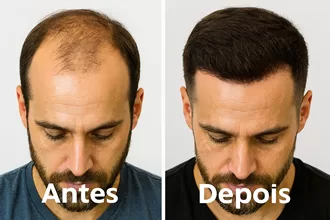
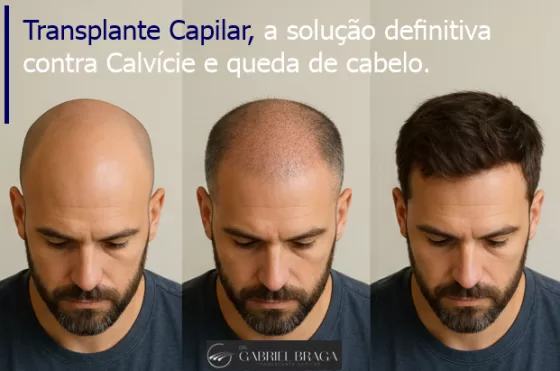
The “Before and After” portfolio (with the ethical caveat that every case is unique).
The support team: A good surgeon does not work alone; they need a team of highly trained nurses and technicians for the separation and conservation of grafts.
The Post-Operative and the “Ugly Duckling Phase”
Transparency is the hallmark of the best professionals in Goiânia. The patient leaves the clinic knowing the result is not immediate. There is Shedding (temporary loss of transplanted hair) occurring between the first and third month. Real, visible growth begins in the fourth month, with the final result consolidated after a year.
Being in Goiânia allows for close monitoring. Many clinics offer complementary therapies included in the post-op, such as MMP (Microinfusion of Medications into the Skin) and LED therapy, which accelerate healing and hair growth, ensuring the investment yields the maximum biological return.
Conclusion: The Future is in Goiás
If you seek to recover your self-esteem, look in the mirror, and see a rejuvenated image, your destination is the Brazilian Center-West. Goiânia has gathered the perfect storm of technology, human talent, and infrastructure to become the Brazilian capital of hair transplantation. It’s not just about hair; it’s about quality of life, and in that, Goiânia is a specialist.
20 Essential Questions and Answers about Hair Implants (FAQ)
To ensure you have no doubts before scheduling your evaluation in Goiânia, we have prepared this quick guide with the most searched questions on Google.
1. What is the average cost of a hair implant in Goiânia? Although the Federal Council of Medicine prohibits disclosing exact prices without a consultation, the investment in Goiânia typically ranges from BRL 12,000 to BRL 25,000 (approx. USD $2,200 – $4,500), depending on complexity and technique (Sapphire, DHI, Robotic).
2. Is the procedure painful? No. The procedure is done under local anesthesia and light sedation. The patient sleeps or remains relaxed during most of the surgery. Post-operative discomfort is minimal and controllable with common painkillers.
3. Does the FUE technique leave a scar? FUE leaves punctiform micro-scars (tiny white dots) that become invisible to the naked eye, even with short hair (clipper guard 1 or 2).
4. How long does the surgery take? On average, 6 to 9 hours. It is artisanal work, strand by strand.
5. Will the transplanted hair fall out again? No. The strands from the donor area (nape) do not possess the genetic code for baldness. They will maintain this vital characteristic in the new area.
6. How long does it take to see the final result? Partial results are visible at 6 months (about 50% of the strands), and the final, dense result occurs between 12 and 14 months after surgery.
7. Can I wear a cap after the transplant? Generally, it is recommended to avoid tight caps for the first 15 days to avoid traumatizing the newly implanted follicles. Loose hats may be allowed sooner, per medical advice.
8. Can women have hair transplants? Yes! It is very common for correcting high foreheads, traction gaps, or female androgenetic alopecia. The technique often does not require shaving the entire head.
9. Is it necessary to shave the head for the surgery? For large male baldness, yes. For smaller cases or women, it is possible to shave only a “window” in the donor area, hidden by the rest of the hair (Long Hair FUE).
10. What is the DHI technique? Direct Hair Implantation. It uses an implanter pen (Choi Pen) that makes the incision and places the strand simultaneously. It is widely used in Goiânia to add density without shaving the head.
11. What is the difference between implanted hair and a wig/toupee? The implant is your own growing hair, which you can wash, cut, and pull. A toupee is an external piece glued on.
12. Can I exercise after the surgery? Light walks after 3 days. Intense weightlifting and excessive sweating should be avoided for about 15 to 30 days.
13. Does Goiânia receive patients from other states/countries? Yes, the majority of patients come from outside, attracted by the city’s fame and the quality of results.
14. How many strands can be transplanted in one session? It depends on the donor area. In a “mega session,” it is possible to transplant up to 4,000 to 5,000 follicular units (approx. 10,000 to 12,000 strands).
15. Can diabetics have hair transplants? Yes, provided the diabetes is controlled. Rigorous pre-operative exams are required.
16. Does the sun damage the transplant? Yes. Direct sun exposure on the scalp should be avoided for at least 3 months to prevent spotting and inflammation.
17. What is the donor area? It is the region from which the strands are removed, usually the nape and sides of the head, where hair is resistant to falling out.
18. Can body hair be used (beard/chest)? Yes, the technique is called Body Hair Transplant (BHT). It is used when the nape does not have sufficient density.
19. Is there a risk of rejection? No, because the donor is the patient themselves (autotransplant). The body recognizes the tissue as its own.
20. How to choose the best clinic in Goiânia? Look for clinics with a Sanitary Surveillance Permit, doctors with RQE (Specialist Qualification Registration), and research real testimonials from former patients.
📋 Checklist: 5 Fundamental Criteria for your Assessment in Goiânia
As a journalist covering this market, I affirm: the consultation is not just a quote, it is an interview. You are hiring a specialist to permanently alter your image. Here is the Golden Checklist for you to take to your evaluation.
1. Formal Qualification (The “Badge”)
Being a doctor is not enough. In Brazil, aesthetic safety requires specialization.
What to check: Ask if the doctor has RQE (Specialist Qualification Registration) in Dermatology or Plastic Surgery.
Why it matters: While general practitioners can perform the procedure, the RQE guarantees the professional underwent years of residency and rigorous testing on anatomy, skin, and surgery.
Key Question: “Doctor, what is your original specialty, and how long have you been dedicated exclusively to hair restoration?”
2. Preservation of the Donor Area (The “Bank”)
This is the most common mistake of “assembly line” clinics. Your donor area (nape) is not infinite. If they remove too many strands, your nape will look sparse and “moth-eaten.”
What to check: If the doctor uses a microscope to evaluate your nape density and if they speak about “donor area management.”
Why it matters: You may need a second touch-up in the future (baldness progresses). If they exhaust your nape in the first surgery, you will be out of “ammunition” for the future.
Key Question: “How do you plan the extraction to ensure my nape doesn’t look sparse and that I have strands available for the future if needed?”
3. The Support Team (The “Invisible Hands”)
The surgeon handles planning and incisions, but the separation and review of follicles are done by technicians and nurses.
What to check: The size and experience of the team that will be in the room with you.
Why it matters: A follicle outside the body dies quickly if not hydrated and handled correctly. An inexperienced team can kill the grafts before they are even implanted. In Goiânia, the best teams have worked together for years.
Key Question: “How many professionals will participate in my surgery, and how is quality control and graft hydration managed during the procedure?”
4. The Hairline Design (The “Art”)
Hair is not just filling holes; it frames the face. Very straight lines look artificial (“doll hair”).
What to check: Ask the doctor to draw the line on your forehead right there. Observe if they respect your forehead musculature (make a mad/surprised face) and if they propose microscopic irregularities for naturalness.
Why it matters: A poorly made hairline is the most obvious sign of a transplant. The doctor needs to have a sense of visagism.
Key Question: “Could you draw the suggested hairline now? How will we ensure it doesn’t look artificial or too straight?”
5. The Real Post-Operative (The “Marriage”)
Surgery is just the wedding day; the post-operative is married life.
What to check: What communication channels you will have after leaving the clinic. Direct WhatsApp with the team? In-person returns included? Therapies (laser/MMP) included?
Why it matters: Questions will arise (scabs, itching, swelling). You need quick support, especially if you are from another state/country and have already returned home.
Key Question: “If I have a question on a Sunday night or notice something strange, who do I talk to? Does the package include initial returns and washings?”